Leeston-Smith Building
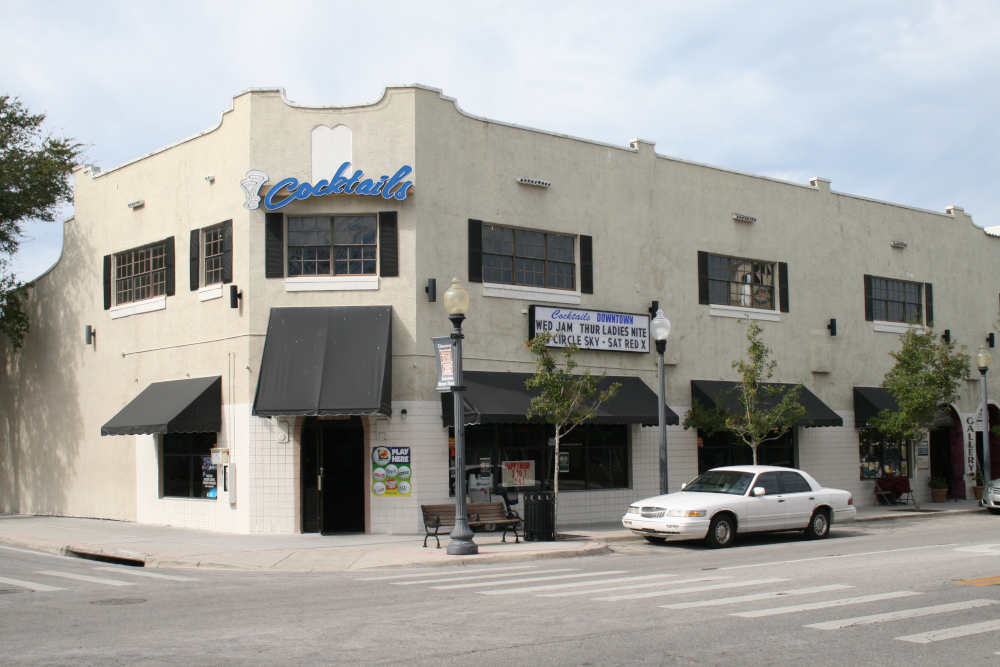
The Leeston-Smith building, built by city leader Ernest Arthur Leeston-Smith (1879 or 1882 – 1945), was completed in March 1926. Originally, the building featured a cupola on its roof at the chamfered corner above its double-arched gothic window. The edifice housed a series of bars, lounges, and restaurants, including Miller’s Cafe beginning in the 1930s and Sebastian’s in the 1980s.
Born in New Zealand, Leeston-Smith was well known in Canada and the Pacific Northwest, where he invested in real estate. He relocated to California in 1921, where he conducted a general realty and brokerage business with partner Dan Gilkey. The two men were selected as the exclusive Long Beach agents for W.H. Daum of Los Angeles, financiers of industrial projects in Southern California.
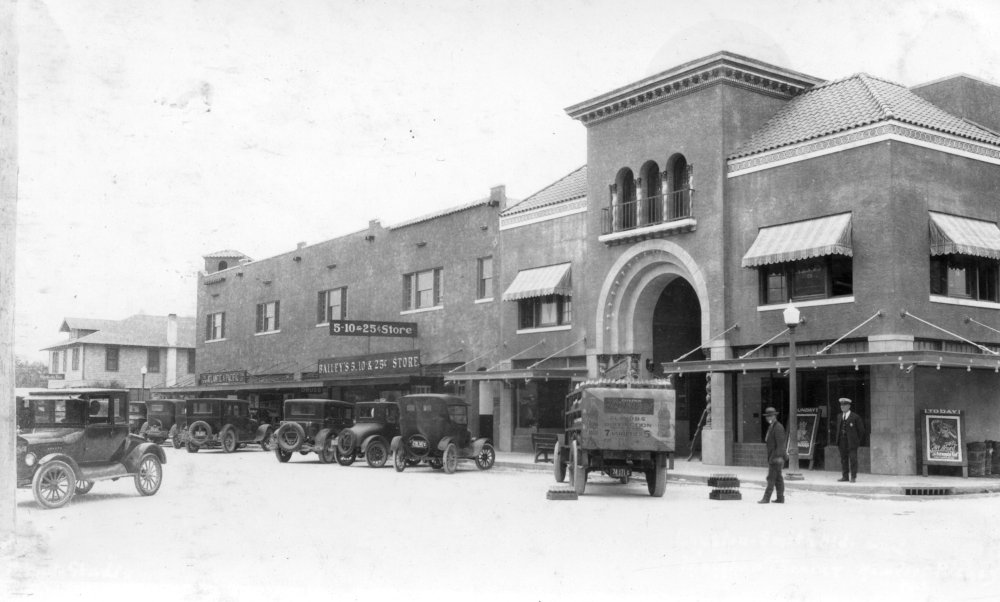
By 1925, Leeston-Smith relocated to Florida and served as the director of the New Port Richey Chamber of Commerce. He also owned a city block with frontage on Grand Boulevard from Nebraska Avenue to Missouri Avenu. Leeston-Smith sold a portion of his land to the Richey Amusement Company, of which he was an investor, to make way for the Thomas Meighan Theatre, completed in 1926, on the block’s north corner. Leeston-Smith retained the southern portion of land and hired contractor T. Cooper to begin construction on a handsome building next to the theatre that was to bear his name. the two attached buildings were known as the Leeston-Smith block.
Known for containing the city’s finest and largest storerooms, in its early days the Leeston-Smith Buildiing housed Holmes Hardware & Furniture Company, A&P Grocery, and Bailey 5 & 10 Cents Store. Later, it contained Kilborne’s Grocery, Hogan’s Fish & Poultry Market, Lashua & Keller Billiard Parlor & Bowling Alleys, and the Chasco Appliance retailer. By 1927, the building’s second floor was occupied by municipal departments, including the city hall, the city council room, and the jail.
The U.S. census of 1930 documented Leeston-Smith residing with his wife, Emma, on Grand Boulevard (identified as North Dixie Highway at the time). By the 1935 census, the couple had returned to Portland, Oregon. Emma, active in New Port Richey’s garden club, died in 1980.
The longstanding Miller’s Cafe & Bar opened in the 1930s by Fred J. Miller thrived in the building until the late 1970s. In the 1980s, Sebastian’s Cafe nightclub and restaurant dominated the downtown area.
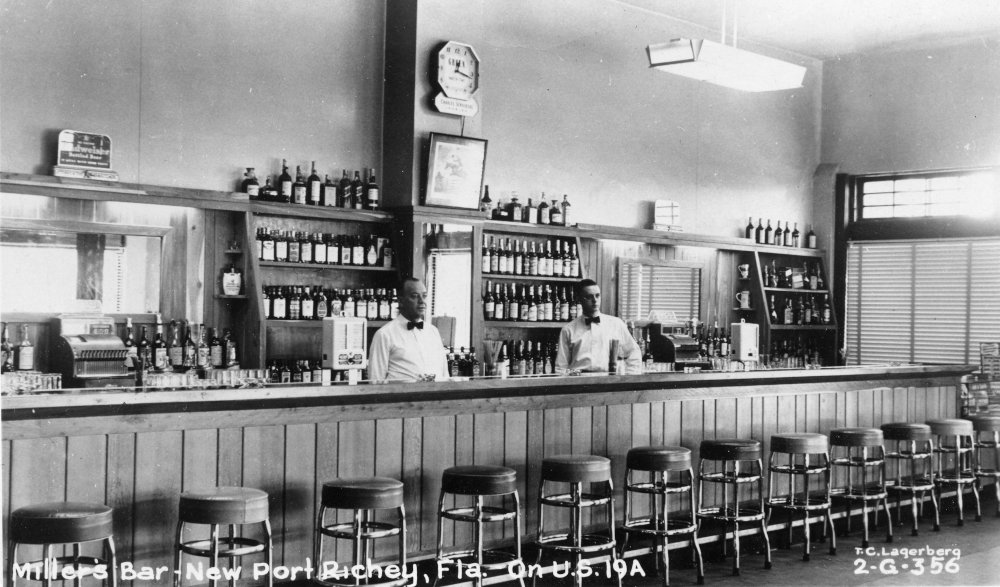
In 1939, the neon sign over the cafe’s entrance earned a mention in the New Port Richey Press as one of several “brilliant and attractive” signs being installed by businesses across the city over the course of ten days. In 1946, Mr. & Mrs. Johnny Gilbert took over the management of the cafe from Lewis and Irene Cooper and installed a semicircular lunch counter and modern equipment.
In the early 1930s, the building was reportedly owned by Ed Wynn, the stage, screen, radio and television actor. Wynn was the next-door neighbor of local celebrity and film star Thomas Meighan (for whom the theatre next door was named). Both men also owned summer estates in Great Neck, New York, and spent their winters in New Port Richey.
In 1946, the ownership of the building passed from Grace Jennings of Massachusetts to J.G. Broussard of Breaux Bridge, a suburb of New Orleans. In 1949, the building was acquired by Dan O. Martin and his wife, Edith, of Hot Springs, Arkansas.
In 1952, Martin placed three benches in front of the building for the convenience of the public and invited other businesses to follow suit with this symbol of hospitality, harkening to downtown St. Petersburg’s abundance of 3,500 benches. St. Petersburg had been known nationwide as the “City of Green Benches”.
Then known as the Martin Building, its new owner converted its large upper floor to hold apartments with small sleeping quarters and a communal recreation space for single, elderly men who required permanent, affordable housing.
The building’s current businesses (2026) include chef Victor Wang and Chiara Covelli’s Asian-themed Zen Kitchen & Bar, also owned by Jay Patel; Sip on Grand speakeasy, owned by Melissa Smith; and Grand Salon & Suites.
the Leeston-Smith Building and, more recently, the Grand Boulevard Avenue Building, which flank Grand Boulevard with mirroring chamfered corners, provide an architectural southern gateway to the downtown New Port Richey historic district.
This article was added on March 23, 2024 by Paul Herman, digital media archivist, West Pasco Historical Society. It is based on a WPHS member newsletter article written by Gary Vitacco-Robles.
Page last edited by Paul Herman on May 6, 2024