Aaron McLaughlin Richey
This article was published 17 June 2025 by Paul Herman, digital media archivist, West Pasco Historical Society
The cities of New Port Richey and Port Richey have recently celebrated their centennials. The two neighboring towns have been referred to in a number of ways in the past, including “New and Old Port Richey” and “The Twin Richeys”. With due respect to history, perhaps it is time to learn a little bit about the man our closely linked cities are named after – Aaron McLaughlin Richey.
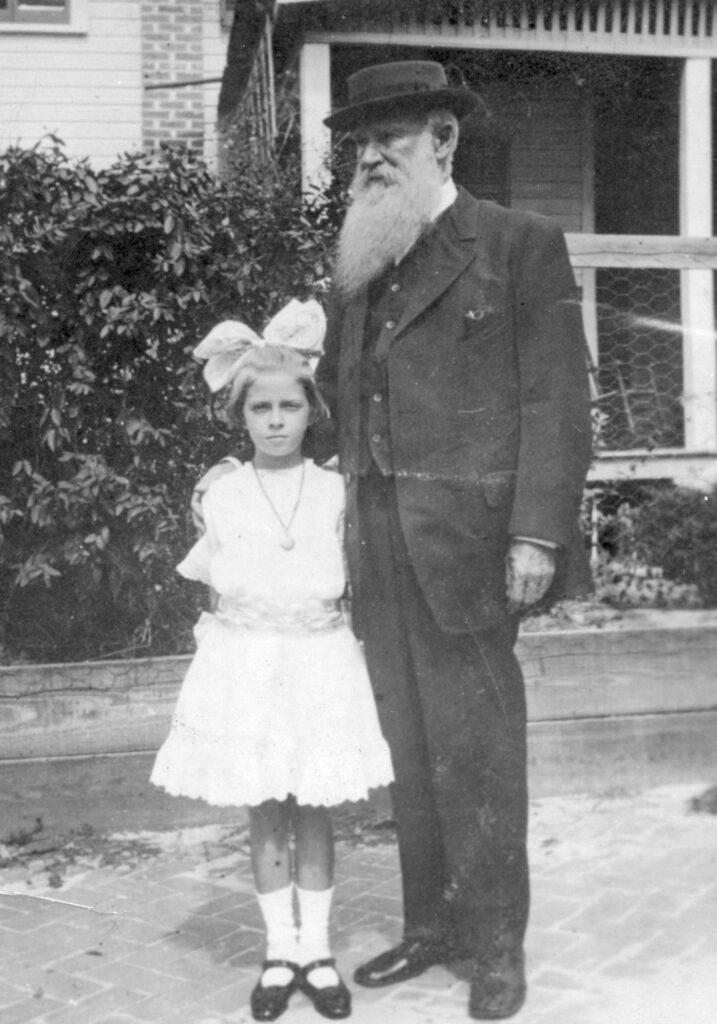
Born in 1837 in Ohio, Aaron Richey moved to St. Joseph, Missouri some time around 1860. Young and adventurous, he lead a wagon train west in 1862 in search of California gold. Upon his return to Missouri, he Married Mary Flint in January of 1866 – she being married twice before and with two children. Aaron became a furniture dealer to support his wife and step-children. They went on to have three more children of their own while living in St. Joseph.
In 1883 Aaron and his family headed south to Florida to seek more opportunities. After arriving by train in Brooksville, they made acquaintance with James Washington Clark, who had previously been the postmaster for the Hopeville Post Office, established in 1878 (it closed in 1881). Clark was married to Francis Louise Hope – a member of the Hope family that had lived in the area since the Civil War, and was known for establishing a salt works southwest of Brooksville along the Gulf coast.
James Clark had homesteaded property along the north bank of the Pithlachascotee River. And he convinced Aaron Richey that the area was a good place to start a new life. In July of 1883, Aaron purchased property near the mouth of the Cotee River from Felix Sowers, which included a small house that Felix had constructed earlier that year.
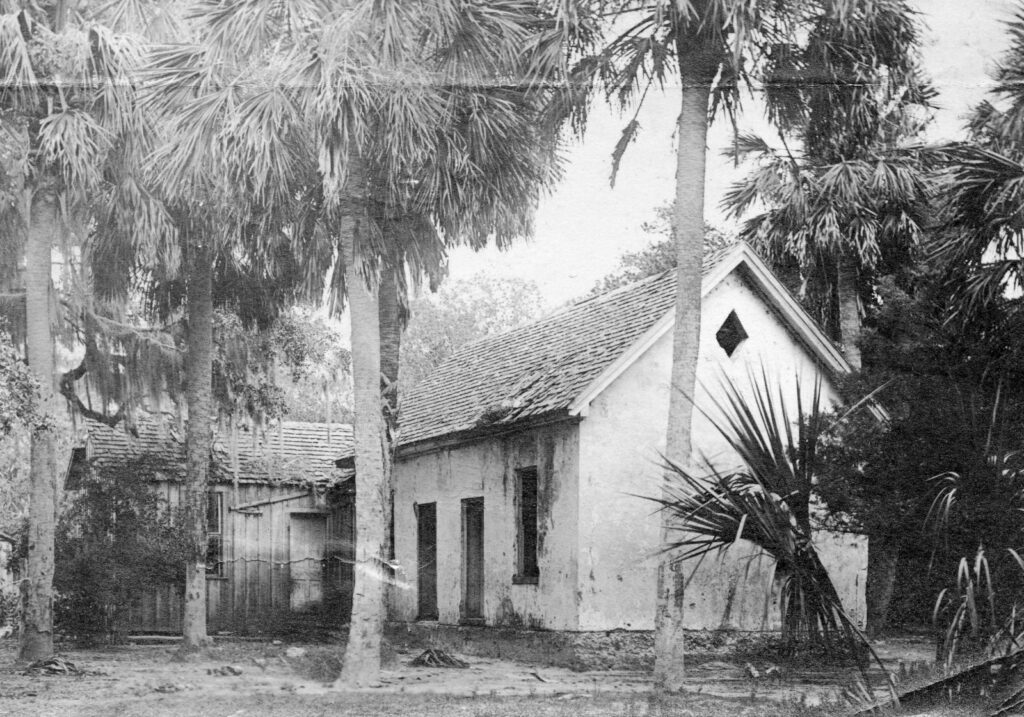
In that early day, moving a family’s belongings by land over long distances was no easy feat. So Aaron decided to ship his household goods by railroad to Cedar Key, where he had a small schooner built to take them the rest of the way to his new homestead. He added on to the house and opened a small general store at what had become known as “Richey Point” to serve fisherman and other settlers in the area.
As time went by, Aaron continued to use his schooner to make trips to Tarpon Springs to replenish his store goods. And although he had not been a seafaring man before moving to Florida, he gained proficiency in nautical skills and came to be known by the locals as “Captain Richey”.
As a commercial vessel, it became necessary to register his boat, and part of that process involved designating his home port … so he simply called it “Port Richey”.
Mail in those days was delivered by horseback from Brooksville, and then to Anclote, using what was known as the “Post Road”. A segment of this road still exists today in Port Richey and is named “Old Post Road”. Aaron Richey resolved that he could improve the mail service by opening a post office at his store. He applied to the post office department in Washington to open a post office, and in July of 1884 his petition was granted for the “Port Richey Post Office”.
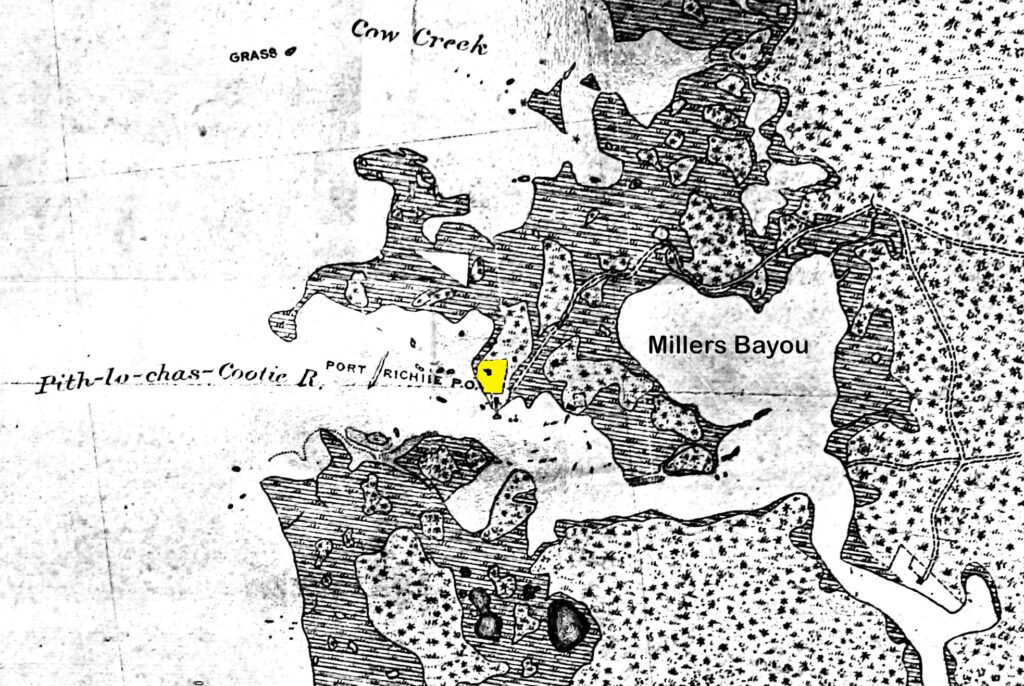
Thus the town of Port Richey, although not yet incorporated, was born. As years passed, the land in the area of what is now Port Richey changed hands a number of times. Much was originally purchased by Anson Safford, who helped develop Tarpon Springs. It was then sold to the Cootie Land & Improvement Company, and eventually in 1905 to the Aripeka Saw Mills that developed the timber town Fivay. In 1911, after most of the timber is cut, Guilford and Weeks purchase much of the land and start the Port Richey Company which intends to subdivide and sell homesites in the Port Richey area. Then George Sims comes to town, purchases the land south of Port Richey that had previously been known as “Hickory Hammock”, and submits a plat for the town of “New Port Richey”. With the Florida land boom now in full swing, the City of New Port Richey is incorporated in 1924. And shortly afterward, the City of Port Richey is incorporated in 1925.
As for Aaron Richey, he served as postmaster of the Port Richey Post Office until late 1891, when he and his family moved to Tarpon Springs. Although two cities were named after him, he spent a remarkably short eight years here. That may have been due to the fact that his family was not at all happy living in the “wilderness” that was Port Richey in the late 1800s. His daughter, Maggie Richey Brown, related in a letter to the New Port Richey Press published in 1922, that the years they spent there were “the most lonesome years of my life, for sometimes it was three months at a time that mother and I did not see a woman”.
More importantly, Aaron had heart problems and his wife was also in ailing health, so he wanted the family to be near a doctor. Even so he continued to be involved in his community, and was elected mayor of Tarpon Springs in 1894.
Five years later, in 1899, his wife Mary died. After Mary’s death, Aaron continued to live with his daughter, Maggie in Tarpon Springs until at least 1910. Then they moved to Jacksonville, where his son was the paymaster of the Hammond Packing House. Aaron McLaughlin Richey died on April 5, 1912. He, and many of his family members, are buried at Cycadia Cemetery in Tarpon Springs.