Seven Springs School / WPHS Museum
Once upon a time there were seven little springs along the south bank of the Anclote River just east of what we now know as Little Road. Pasco pioneer Samuel Stevenson established a homestead at the site in the mid 1800s. Recognizing the reputed health benefits of the spring water, he installed a well pipe and a concrete pool at the location, and made it available to the public – who came from as far away as Tampa to drink and bathe in the healing waters of the mineral springs.
Stevenson died in 1897, and his wife followed him shortly afterward in 1900. Their heirs sold the land around the spring to Colquitt Johnson in March of 1905. Colquitt submitted a plat for a proposed town centered around the “Seven Springs”, and planned to turn it into a resort area.
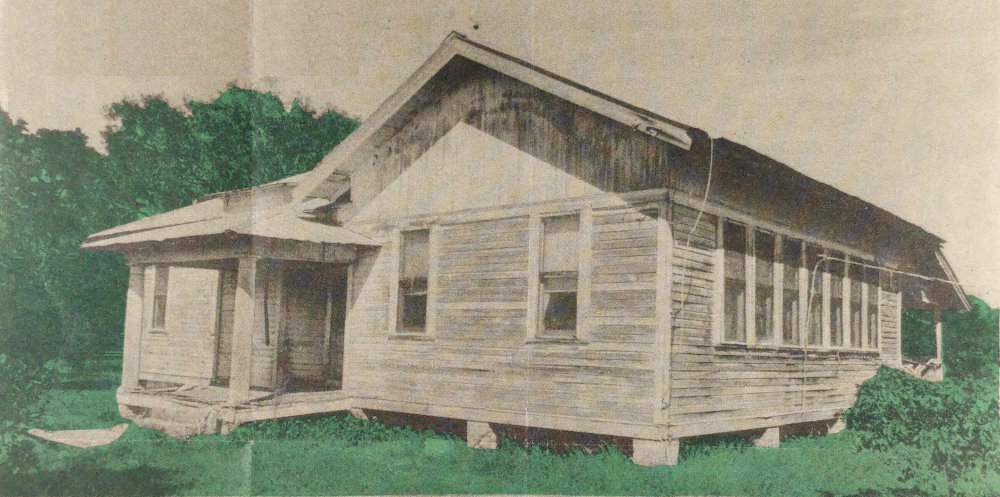
Although the resort plan never really gained much traction, the area did attract enough people so that the Pasco County Board of Public Instruction decided a school was necessary to serve the population. In late 1914 a wood frame schoolhouse was built along the east side of the road through the Seven Springs Resort. Although Colquitt Johnson had originally set aside a one acre parcel of land in his plat for a school, the schoolhouse was actually built on a lot several hundred yards north of the intended location. We can only guess that Johnson funded the school and provided the land as a public service to the resort community he was trying to promote.
In her book, “Florida Cracker Days in West Pasco County”, Pauline Stevenson Ash relates that the school was inadvertently built on property owned by T.J. Witt. The historical marker placed at the entrance to Seven Springs Golf & Country Club in 2008 also makes this claim. But while Thomas Witt eventually did live in the house, deed records show that it was actually owned by Colquitt Johnson the entire time it was a school.
The Seven Springs School was in operation from 1914 until 1925. It had two rooms separated by a long hallway. One room was a classroom and the other an auditorium. Behind the building was a 3-hole outhouse. One teacher taught all grades. The number of students varied from about 12 to 20, with some students coming from nearby Odessa. When the School Board closed the school in 1925, younger students were then sent to the Elfers School, and older students went to the newly completed Gulf High School.
In April of 1926, the schoolhouse was purchased from Colquitt Johnson by Ed Frierson and he lived there with his wife Willie Maude, their children, his mother Annie Frierson, and his step-father Thomas Witt.
Ed Frierson died in 1947, and his wife and family continued to reside in the old schoolhouse. Sometime after 1950, the Frierson family moved out and the property stood vacant for many years.
By 1981, the developers of Seven Springs Villas (now known as Seven Springs Golf & Country Club) wanted the property. Willie Maude Frierson sold the property to Alex and Dorothy Acey in March of 1981, and Alex planned to raze the building and sell the lumber. Instead he decided to donate the building to the Pasco County School Board which was planning on moving it to a location next to their Adult Education Center on South Boulevard (the old Gulf High School site) – using the basketball court north of the high school building as a foundation for the old schoolhouse. Apparently, these plans fell through, and Alex then donated the building to the West Pasco Historical Society (WPHS) in September of 1981. Permission was obtained from the City of New Port Richey to move the old schoolhouse to Sims Park and use it as a museum.
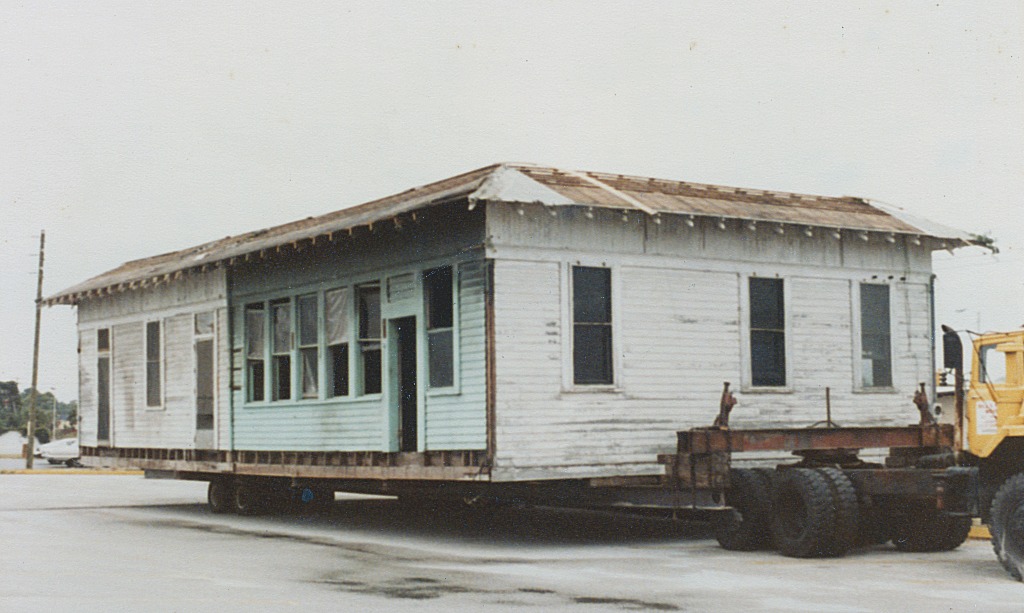
The schoolhouse was relocated from Seven Springs to Sims Park in New Port Richey in October of 1981. In order to clear obstacles along the way, the roof needed to be removed. And to prevent unnecessary traffic problems it was moved during the night. Long time resident, and past WPHS president Terry Kline relates that he sat on top of the building while it was being moved and used a pole to lift power lines out of the way.
Needless to say, the old schoolhouse – which was already over 60 years old – needed many repairs after the move before it could be used as a museum and meeting place for the WPHS. With the help of volunteers, local businesses who provided materials and labor at little or no charge, and fund raisers, the museum was finally ready and opened to the public in April of 1982.
By 1986, it was becoming obvious that the WPHS was outgrowing its available space in the museum. Ever since the old schoolhouse had been moved to the Park and renovated, the WPHS had been holding its membership meetings in a room of the museum. As the membership grew, there was a need for more meeting space. The WPHS Board decided to build a new meeting hall on property just to the west of the museum building. It would be a 40 x 60 foot wood frame structure connected to the museum by a walkway – with an estimated cost of $60,000. A building fund was started, and fundraising began with bake sales and fashion shows.
In early 1987, the Grey family – owners of the oldest real estate company in West Pasco County – offered to give a substantial donation toward building the new meeting hall. In return for their contribution they asked for family patriarch James Grey – who died in 1985 – to be honored by naming the new building for him. The Board of Directors of the WPHS at their March 12, 1987, meeting declined the offer saying “we should not name the building after anyone unless they paid for same or the greater part of the construction for same; otherwise it would not be fair if some other individual or company wished to make a large donation to the building fund”. Notwithstanding this refusal by the Board, the Grey family still donated $1,000 to the building fund, and established a James Grey Memorial fund to help fund other WPHS projects.
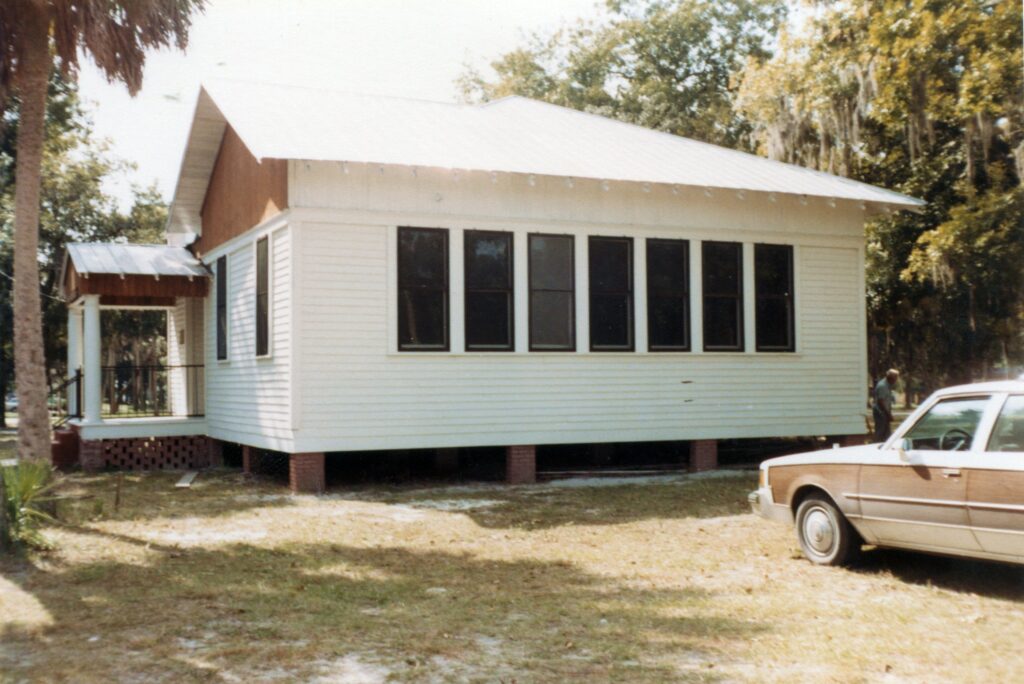
Eventually, the plan for a separate meeting hall building began to seem unrealistic. So the Board decided that adding on to the existing museum was the best option. In 1992, the idea of adding a wing to the north end of the building for use as a library addition was the best way forward. Plans were drawn up and submitted to the New Port Richey City Council for their approval. The City agreed to take on the project themselves, solicit bids, and supervise the construction as part of a matching grant to finance the new library wing. Once completed, the WPHS paid their share of the cost – which was raised through donations along with the money in their existing building fund.
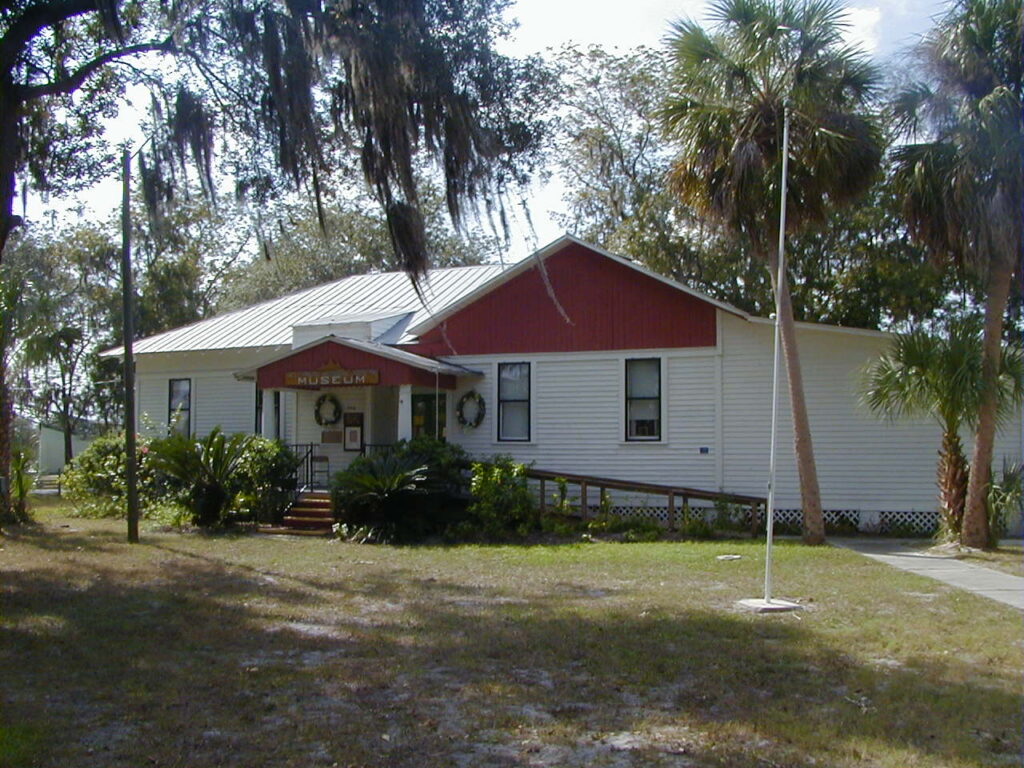
In 2009, the museum building was again in need of some repairs. Now almost 100 years old, the vertical siding on the building under the gables, and the soffits, needed to be replaced, and the roof – which had been replaced in 2003 – had some leaks around the eaves. Inside the building, the wood paneling was getting rotten and the museum displays needed to be updated. The plan was to do the outside renovation first in the summer of 2009, and the inside work in the summer of 2010 – with the whole project projected to cost about $40,000.
The City of New Port Richey again stepped up with a matching grant for $20,000. Existing funds, along with the City match and fund-raisers, paid for the outside work on the building which, after delays, was finally completed by fall of 2010. After more donations from WPHS members and the Questers group, WPHS President Bob Huback said in a June 2010 news article that an additional eight to ten thousand dollars was needed to finish the inside renovation.
In 2011, cardiologist Dr. Rao Musunuru stepped forward and agreed to finance the balance of the renovation. He had a grander vision of what the museum should be, and brought in a professional curator to oversee the interior museum display changes. He also paid for new signage to reflect a Board-approved name change of the museum to the Rao Musunuru, MD Museum & Library.
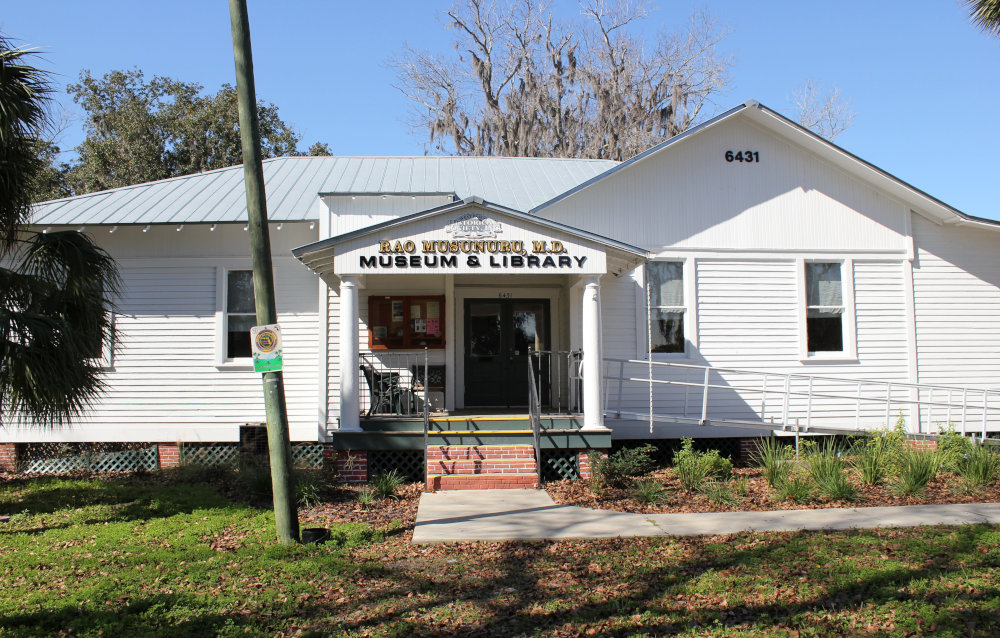
The interior layout was changed and many of the exhibits were redesigned and improved in 2019. The bathroom and kitchen area were completely remodeled (in an antique sort of way) in 2024. And the exterior porches and stairs have been replace with new construction. Today (in 2025), the “Old Schoolhouse in Sims Park” is over 110 years old, and in its best shape ever.
This article was added on September 15, 2025 by Paul Herman, digital media archivist, West Pasco Historical Society. It is based on an article that appeared in the Suncoast News on September 3, 2025.
Page last edited by Paul Herman on September 15, 2025